Paddy Power Announces Plans to Close Up to 100 Betting Shops Amid Tax Increases
Written by Sam Simmons · Sep 4, 2026

Paddy Power Announces Plans to Close Up to 100 Betting Shops Amid Tax Increases
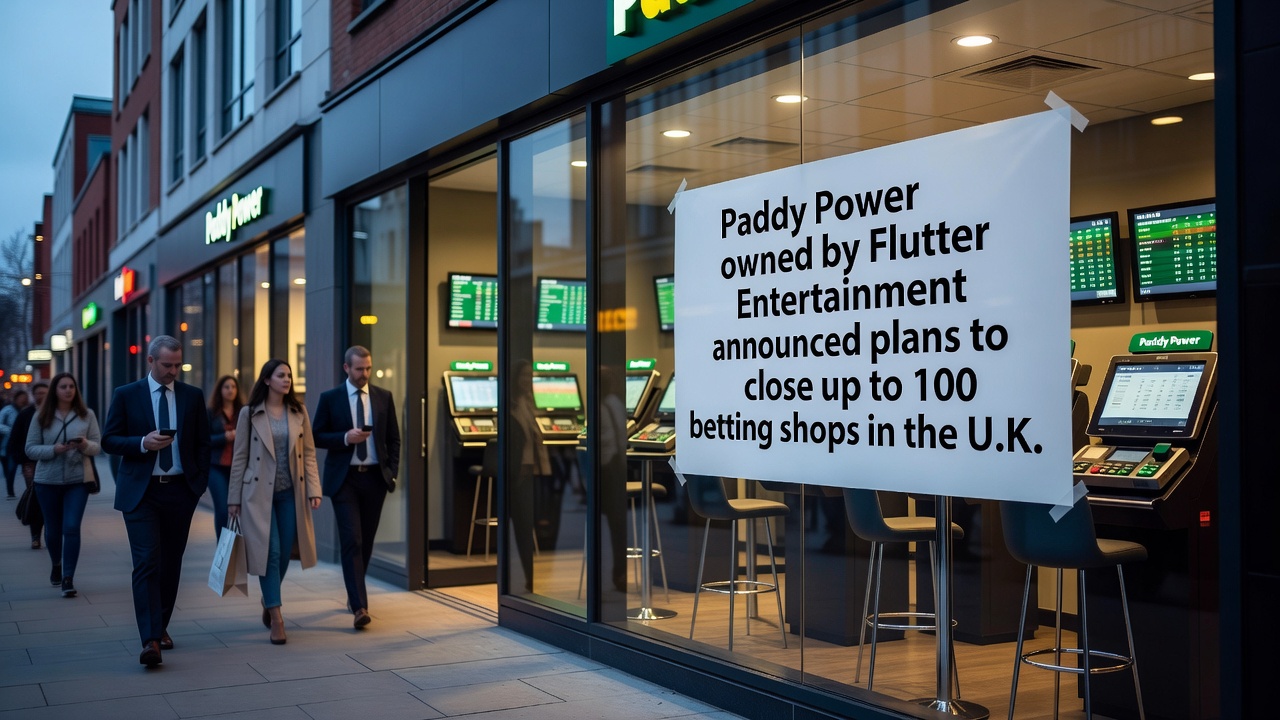
Paddy Power, a brand owned by Flutter Entertainment, has outlined plans to close up to 100 betting shops across the UK and Ireland, a move that places approximately 400 jobs at risk following tax rises introduced in the recent UK budget; the company operates 506 shops in total with 310 located in the UK, and it intends to redeploy affected staff wherever possible while other operators including William Hill, Betfred and Entain have already implemented similar reductions in their high-street networks.
Details of the Closure Announcement
The decision stems directly from higher taxes on the gambling sector that took effect after the budget, and company representatives have noted the cumulative pressure on physical retail operations as costs rise and footfall patterns shift; observers note that the closures will occur gradually rather than all at once, allowing time for staff consultations and potential transfers to remaining locations or other roles within the group. Data from industry reports shows that high-street betting has faced sustained challenges for several years, with the latest tax measures accelerating decisions that some operators had already begun to evaluate.
Impact on Employment and Staff Redeployment
Approximately 400 positions face uncertainty, yet Flutter Entertainment has stated it will prioritise internal redeployment and support packages for those affected, including training for alternative positions where shops remain open; this approach mirrors strategies used by competitors who have managed earlier rounds of closures without large-scale redundancies in every case. Those who have studied workforce trends in retail betting know that many employees possess transferable skills in customer service and compliance, which can ease transitions when operators expand their digital platforms instead.
But here's the thing: the scale of these reductions highlights how tax changes interact with existing regulatory requirements, creating a tighter margin environment for bricks-and-mortar sites that once formed the backbone of the industry. Figures from recent years indicate that the number of betting shops in the UK has already declined steadily, and the current measures add another layer of financial calculation for groups like Flutter.
Broader Industry Context and Previous Closures
William Hill, Betfred and Entain have each closed locations in preceding months, citing similar cost pressures from taxation and compliance obligations, so Paddy Power's announcement continues a pattern that has affected multiple major operators rather than representing an isolated event; according to industry analyses from the European Gaming and Betting Association, physical retail betting across Europe has seen consistent contraction as operators reallocate resources toward online channels that operate under different cost structures. European Gaming and Betting Association reports document how tax regimes in various jurisdictions influence the balance between retail and digital offerings.
What's interesting is that Ireland faces parallel effects even though the tax changes originated in the UK budget, because operators often apply group-wide efficiency reviews that encompass both markets; the 310 UK shops and remaining Irish locations will see targeted reductions chosen on the basis of performance data, lease terms and local demand levels. Researchers at academic institutions such as the University of Nevada, Las Vegas have examined comparable market shifts in other regions, revealing that tax increases frequently prompt accelerated consolidation in retail gambling sectors.
Company Response and Future Operations
Flutter Entertainment has emphasised that remaining shops will continue to serve customers and that digital services remain unaffected by the retail adjustments, while the group maintains its overall footprint through online platforms that have grown substantially in recent years; statements released alongside the closure plans underline the company's commitment to supporting staff during the transition period. And yet the reality is that each closure reduces the physical presence of betting outlets in high streets and town centres across both countries.
One study revealed that operators who combine retail reductions with investment in technology and responsible gambling tools often maintain revenue stability despite fewer locations, although outcomes vary depending on local regulations and consumer preferences. University of Nevada, Las Vegas research on gambling market adaptations provides further context on how companies respond when fiscal policies change.
Regulatory and Tax Environment Pressures
The budget measures increased the burden on gambling operators at a time when regulatory scrutiny has also intensified around player protection and advertising standards, creating a dual challenge that affects profitability calculations for every physical site; those who've tracked these developments note that the combination of higher duties adn compliance costs leaves less room for marginal locations to remain viable. Government agencies in multiple jurisdictions continue to review gambling taxation frameworks, and the current UK adjustments form part of that wider landscape.
Conclusion
Paddy Power's planned closures of up to 100 shops and the associated risk to around 400 jobs reflect the direct consequences of recent UK budget tax increases on the gambling sector, following similar actions by other major operators and occurring within a total network of 506 shops. The company's stated intention to redeploy staff where feasible, alongside ongoing operations in both the UK and Ireland, illustrates how individual businesses adapt to shifting fiscal and regulatory conditions while the high-street betting industry experiences continued structural change.